10th ESG Advisory Board (2026)
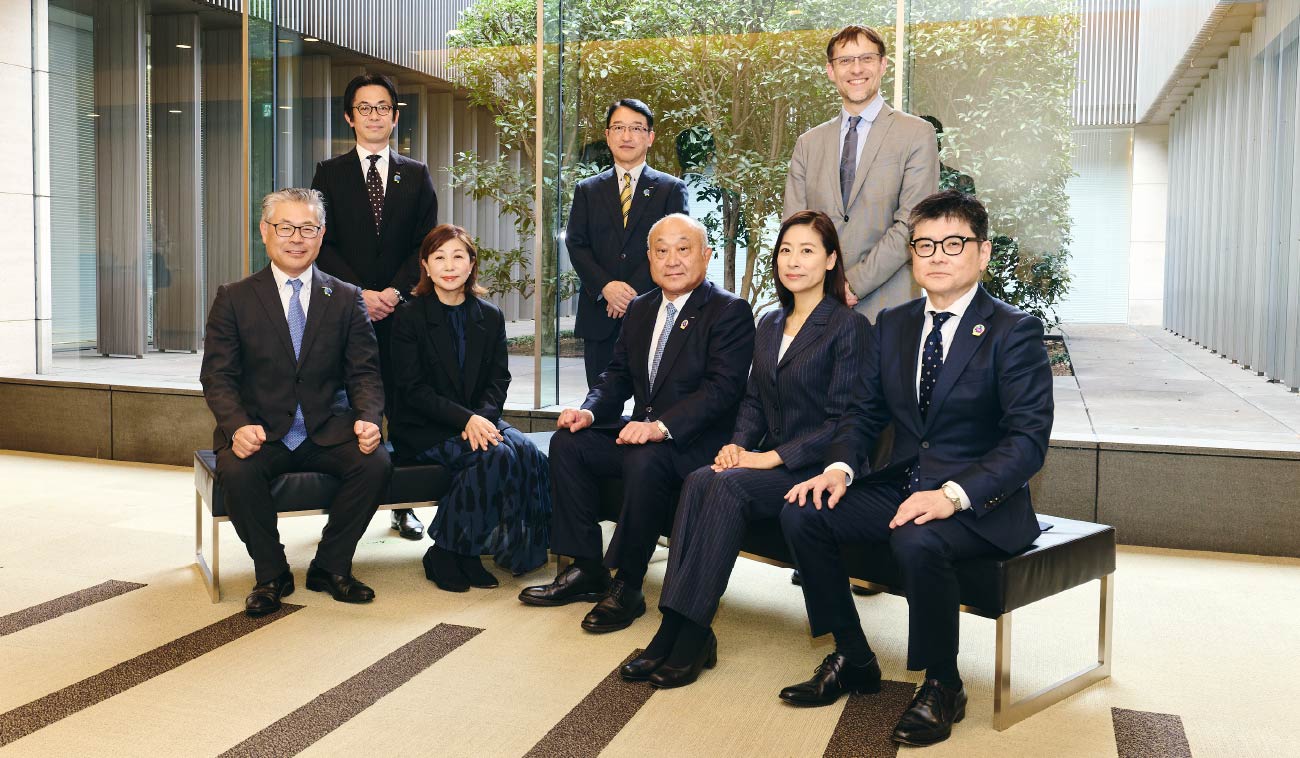
Date: February 17, 2026
Participants:
- [Experts]
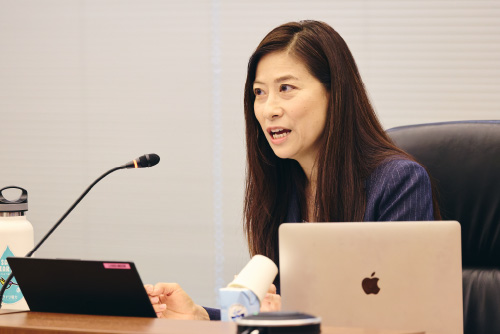
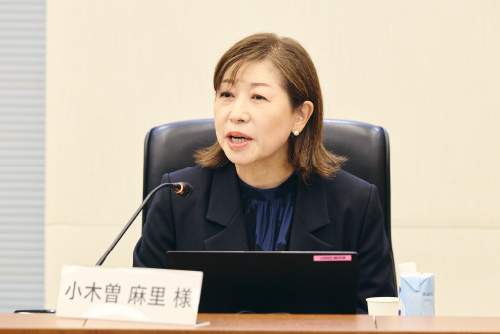
- Mari Kogiso
Co-CEO, SDG Impact Japan - Rika Sueyoshi
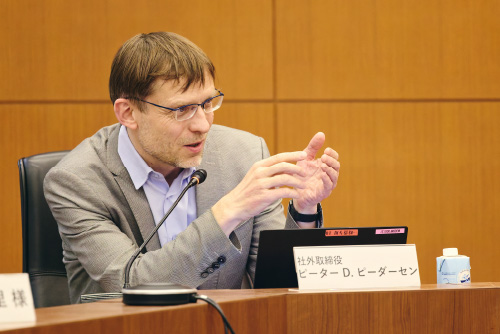
CEO, Ethical Association - Peter David Pedersen
Representative Director, Next Leaders' Initiative for Sustainability (NELIS)
Independent Outside Member of the Board, Meiji Holdings Co., Ltd.
- [Internal Members]
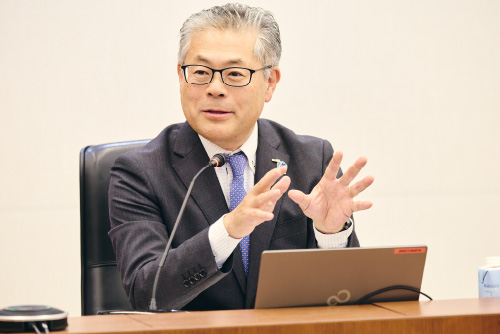
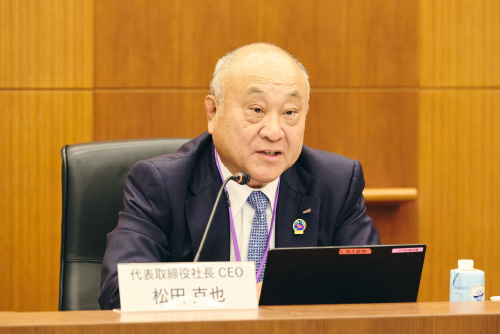
- Katsunari Matsuda
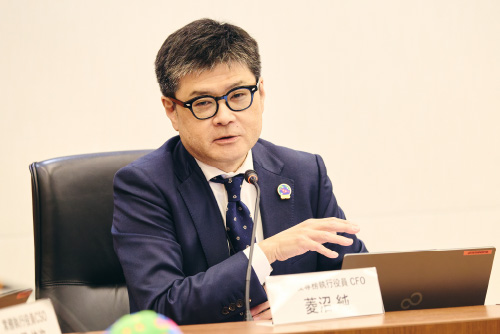
Chief Executive Officer, President and Representative Director - Jun Hishinuma
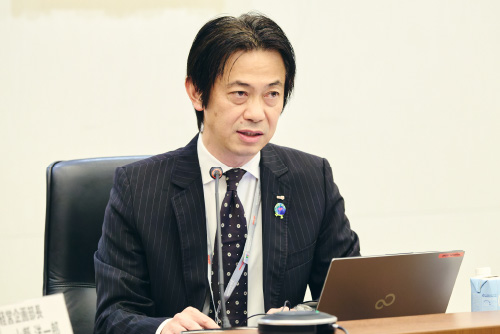
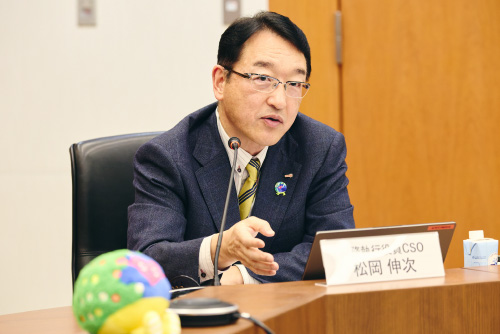
Chief Financial Officer, Member of the Board and Senior Managing Executive Officer - Shinji Matsuoka
Chief Sustainability Officer, Managing Executive Officer - Youichirou Yamagata
Executive Officer, Corporate Development Dept. - Jirou Morita
General Manager, Sustainability Management Dept.
- Exchange of opinions
- Topic 1 "Materiality" importance assessment from the employee perspective
- Topic 2 The degree to which the "fusion of sustainability and business strategies" has become ingrained within the organization and its evolution in the next vision
Topic 1 "Materiality" importance assessment from the employee perspective
Using accessible language to make employees feel a sense of ownership of social issues. Communicating to employees, as a story, how the company's business connects to producers' livelihoods and the health of children to create a driving force for sustainability.
Expert opinions
- The complexity of terms such as "materiality" may itself be a barrier, making it difficult to visualize social issues. To encourage employees and consumers to have a sense of ownership of these issues, it is important to devise ways of communicating them in clear and accessible language.
- The low scores for "respect for human rights throughout the value chain" and "marketing with high ethical standards" are a concern. By conveying to employees, through tangible and relatable stories, how the company's business connects to the livelihoods of producers and the health of future generations of children, a sense of pride and fulfillment can be developed, which in turn could become a driving force for sustainability initiatives.
Topic 2 The degree to which the "fusion of sustainability and business strategies" has become ingrained within the organization and its evolution in the next vision.
Meiji should identify the social issues it is uniquely positioned to address and work toward creating new markets. For its growth strategy, it is important to establish a consistent narrative unique to Meiji that generates both business value and social value.
Expert opinions
- To identify business opportunities, it is important to develop a more detailed understanding of social issues. Effective approaches include holding workshops and visiting sites in person.
- "Creating new markets" should be a key concept. Meiji should set social issue themes that would likely remain unaddressed unless the company itself takes action, and aim to create a sequence in which these issues gain public recognition, attract funding and policy changes, and ultimately lead to the creation of new markets.
- Companies should aim to play an educational role for consumers. Although Japan is often described as having a silent majority, many latent needs exist, and companies must work to identify and communicate them.
- In the long-term growth strategy for the next vision, Meiji should establish a consistent narrative that is unique to the company and generates both business value and social value, further advancing the integration of sustainability and business strategies.