Chewing—the process of breaking down food so it can be swallowed easily—is essential not only to the enjoyment of eating but also to the physical and mental well-being that supports a healthy life.
Meiji Co., Ltd. has conducted research on chewing for many years. More recently, this research has expanded beyond developing new products such as gummy candies to exploring applications in healthcare and creating food-related business solutions for external partners.
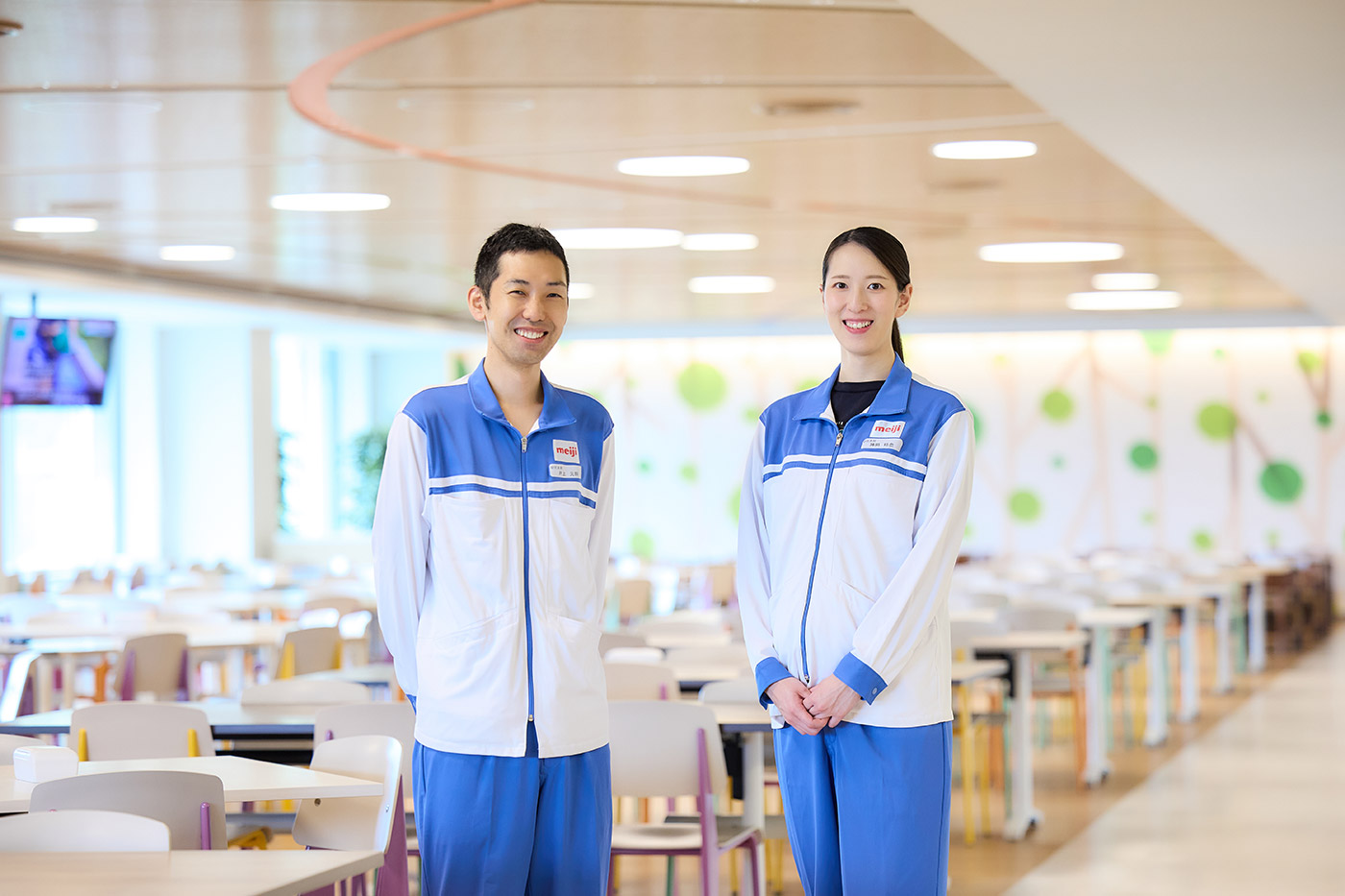
We spoke with two researchers who are working to shed light on the still largely unexplored process of chewing and uncover new possibilities for the future of food.
Supporting the joy of eating well for life
Chewing plays a vital role in supporting health and well-being throughout our lives. In recent years, however, oral frailty—the gradual decline in the ability to chew and swallow—has become a growing concern in aging societies.
Recognizing the importance of chewing, Motoki Inoue has dedicated his career to advancing research in this field. His passion began with a formative experience during his university years.
"While studying to become a registered dietitian," Inoue says, "I completed a practical training placement at a senior care facility, where I helped residents with their meals. What struck me most was how much they looked forward to mealtimes each day. I realized that the joy of eating could be a powerful source of vitality, and I came to understand just how important chewing is."
After joining Meiji, Inoue was determined to contribute to the fields of food and health. He requested a transfer to the department devoted to chewing research. But once there, he encountered a major challenge.
"The process of breaking down food in the mouth and mixing it with saliva to form a bolus—a rounded mass of chewed food ready to be swallowed—is remarkably complex. It's difficult to observe directly, and because chewing force and saliva production vary from person to person, conventional measurement devices have been unable to capture exactly what happens inside the mouth."
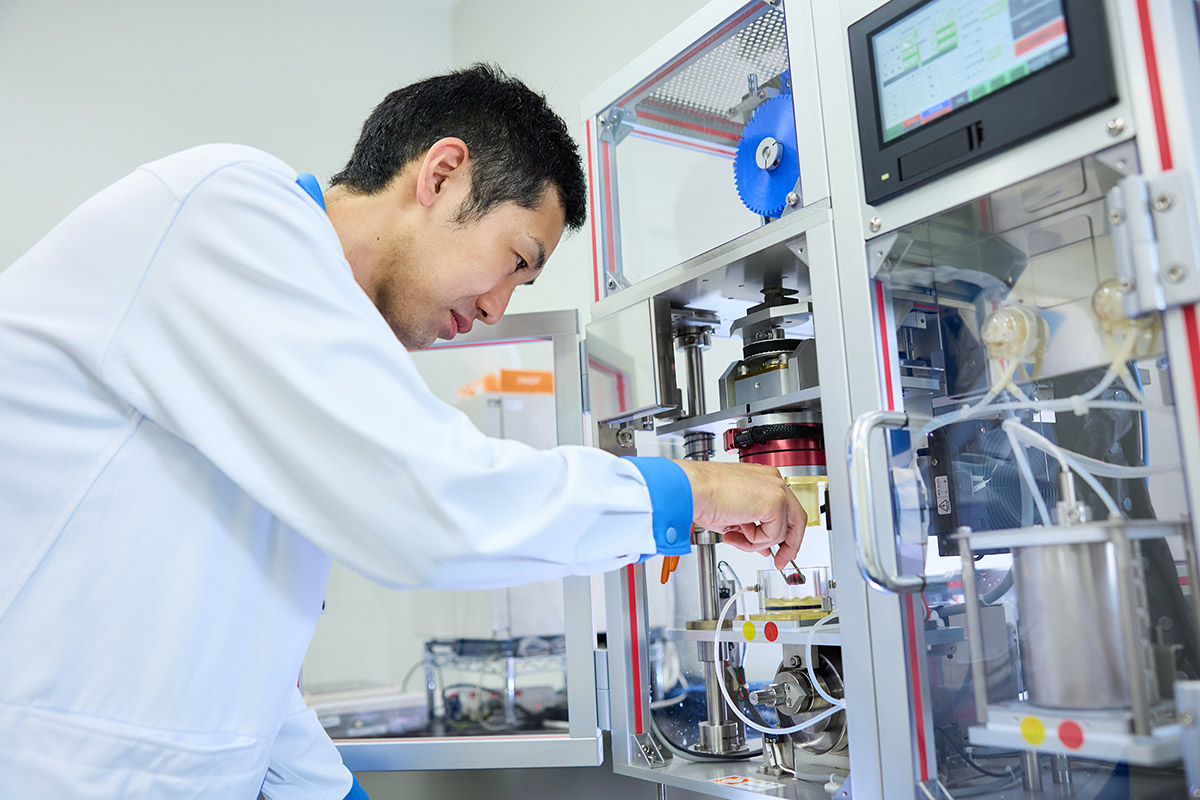
Inoue measures a food sample using ORAL-MAPS.
To advance their research, the team concluded that it needed to develop a device capable of replicating conditions inside the human mouth. In 2018, Inoue began developing the ORAL-MAPS® chewing simulator. Determined to accurately reproduce the changes that food undergoes during chewing, he refined every aspect of the simulator through extensive trial and error. For example, he used 3D printing to create components that mimic the function of human teeth.
In 2020, two years after development began, the first ORAL-MAPS prototype was completed. That same year, Reina Kanda joined the department, and began working with Inoue on full-scale chewing research using the new system.
Quantifying gummy texture for food products and dental applications
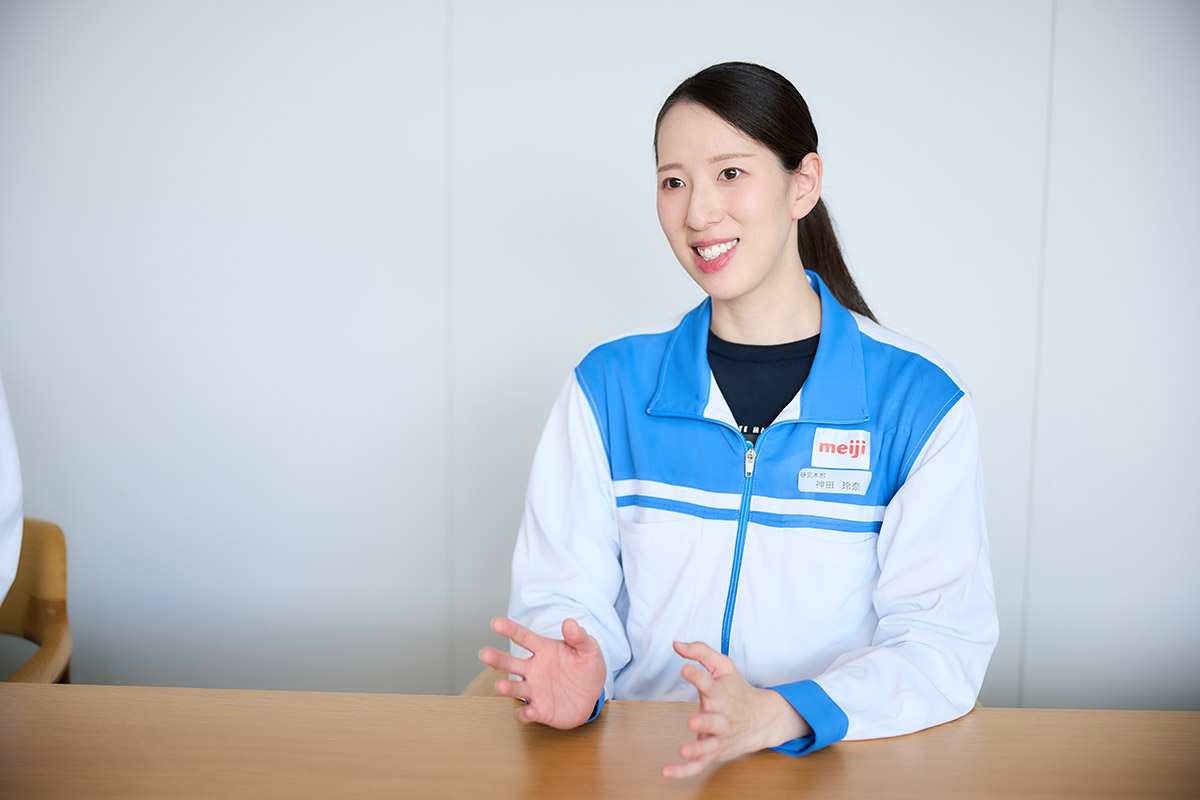
Driven by a desire to help people enjoy delicious food and better health—two essential elements of a fulfilling life—Reina Kanda joined Meiji's chewing research team during her second year with the company. While Inoue focused on developing the technology behind ORAL-MAPS, Kanda explored applying the data it generated. Their complementary roles marked the beginning of a close collaboration.
As they tested a wide variety of foods, the researchers first focused on gummy candies. Because gummies break down gradually as they're chewed, the team believed they would provide an ideal model for quantifying the chewing process.
Around that time, Meiji's gummy product development team approached the researchers with a challenge. Although two prototype gummies had noticeably different textures when eaten, conventional equipment could not detect any difference between them.
"When we analyzed the gummies using ORAL-MAPS, we found clear numerical differences in how they broke down during chewing, reflecting variations in hardness and elasticity. For the first time, we were able to observe and quantify the changes gummies undergo when chewed. I'll never forget how excited we were when we saw the results," Kanda recalls, her eyes lighting up.
This breakthrough led Meiji to create the Chewiness Chart, which now appears on its gummy candy packaging.
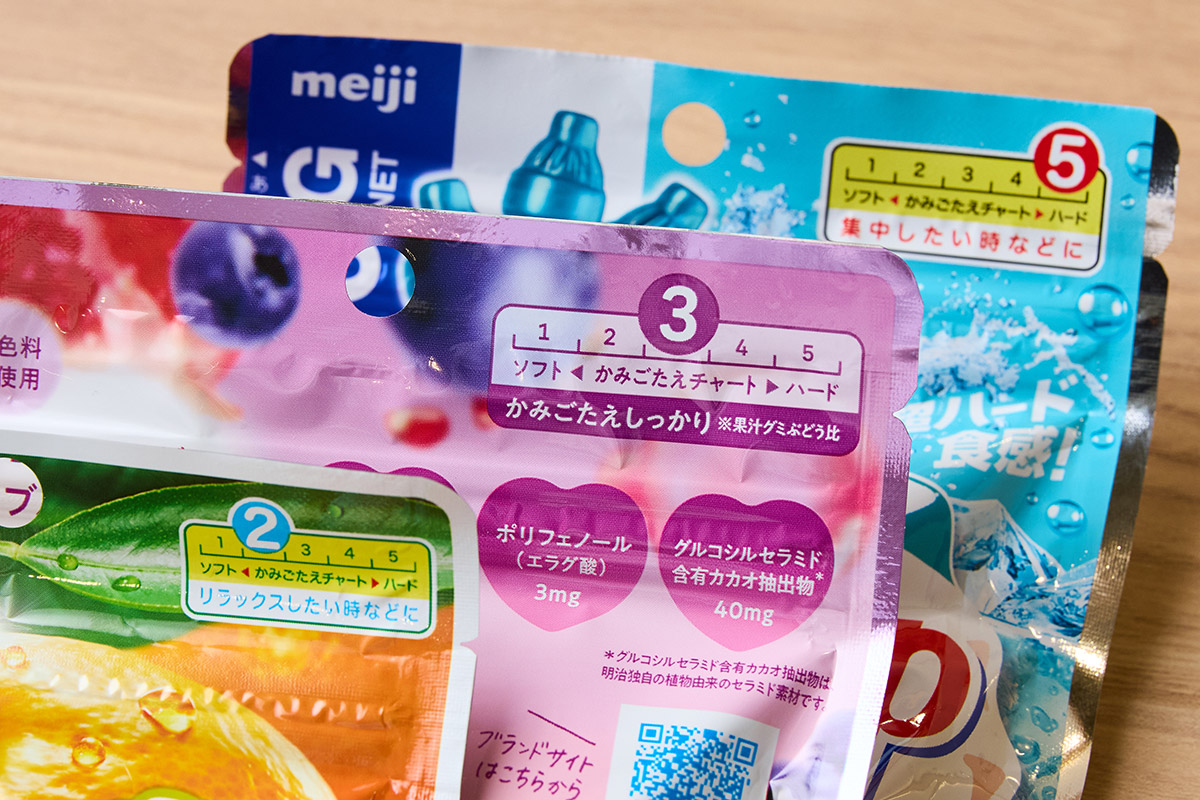
The Chewiness Chart on Meiji's gummy packaging rates texture on a five-level scale from soft to firm.
Using data generated by ORAL-MAPS, the researchers classified chewiness into six levels. In collaboration with another in-house research team, they also confirmed that each level of chewiness was associated with a different psychological response after eating.
The packaging now recommends occasions for each chewiness level. For example, "Level 2 (Softer)" for relaxing and "Level 5 (Firmer)" for staying focused. This allows consumers to choose a texture that matches their mood or the occasion, creating a new way to enjoy gummies.
The chewiness scale has also become a shared language for describing food texture objectively, which had previously relied largely on subjective perception. By giving product developers a common framework for discussing texture, the scale has streamlined communication and accelerated product development.
ORAL-MAPS has since expanded beyond product development into healthcare applications. Building on its gummy research, Meiji collaborated with GC Corporation, a manufacturer of dental materials and other products, to study the gummy jelly used in chewing ability tests at dental clinics and other healthcare settings.
Using ORAL-MAPS to analyze how the gummy jelly changed during chewing, the researchers determined how chewing force and saliva production affected its properties. Their findings attracted considerable attention at the annual meeting of the Japanese Society of Gerodontology. For Kanda, the project marked a turning point in her career.
"I originally joined Meiji hoping to work in product development, so chewing research was completely new to me. I was a little uncertain at first, but as I worked with ORAL-MAPS, I became increasingly fascinated by the depth and potential of chewing and texture research. I'm excited to see our work expand beyond product development into dental care."
Supporting the early detection and prevention of oral frailty
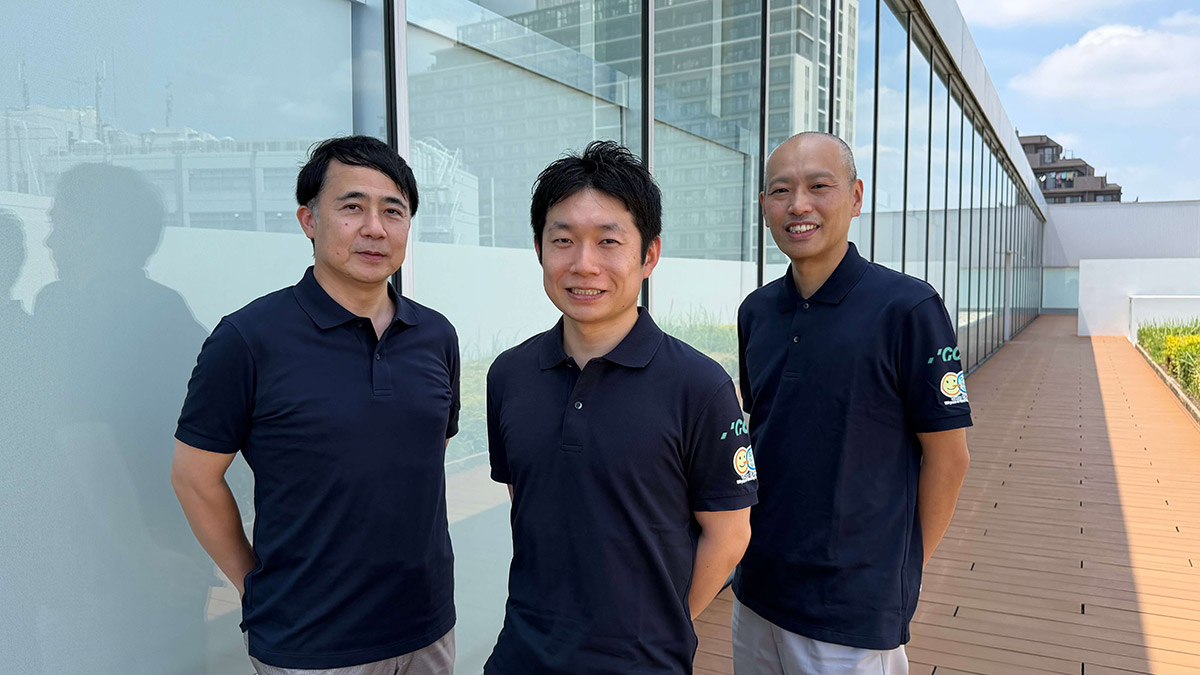
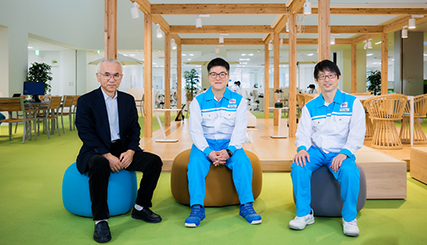
Hiroaki Kakinuma (Center)
Shouichi Fukushima (Left)
Masatoshi Yoshinaga (Right)
GC Corporation R&D Institute
At GC, we develop and manufacture gummy jelly used to evaluate chewing ability in dental clinics and other healthcare facilities.
Through our joint research with Meiji, we were able to understand how chewing force and the amount of saliva affect the chewing process. In particular, we found that saliva plays a particularly important role in chewing firmer gummy jelly. This research provided objective evidence of oral changes that had previously been understood largely through subjective observation.
Maintaining oral function is widely recognized as an important part of extending healthy life expectancy. By combining dental care with food science, this collaborative research may help support the early detection and prevention of oral frailty.
The latest ORAL-MAPS quantifies melt-in-the-mouth texture
Through their diverse research projects, Inoue and Kanda have continued to advance ORAL-MAPS. The newest version has twice the sensor sensitivity of the original, enabling it to measure the texture of foods, such as whipped cream and melted cheese, as well as how those foods melt in the mouth. In 2025, Meiji introduced the upgraded system at the Meiji Application Center (APC), the company's B2B facility that develops recipes and menu concepts using the company's foodservice products.
"Our technology is beginning to deliver real-world value, marking a new phase in chewing research," says Inoue.
"Every day, APC receives requests from a wide range of corporate customers to use ORAL-MAPS to measure food properties such as firmness and adhesiveness. But measurements alone don't tell the whole story. Equally important is tasting the food ourselves and analyzing the data alongside our own sensory impressions. By sharing the expertise we've developed over the years with the APC team and working together to interpret the findings, we can provide customers with more meaningful insights."
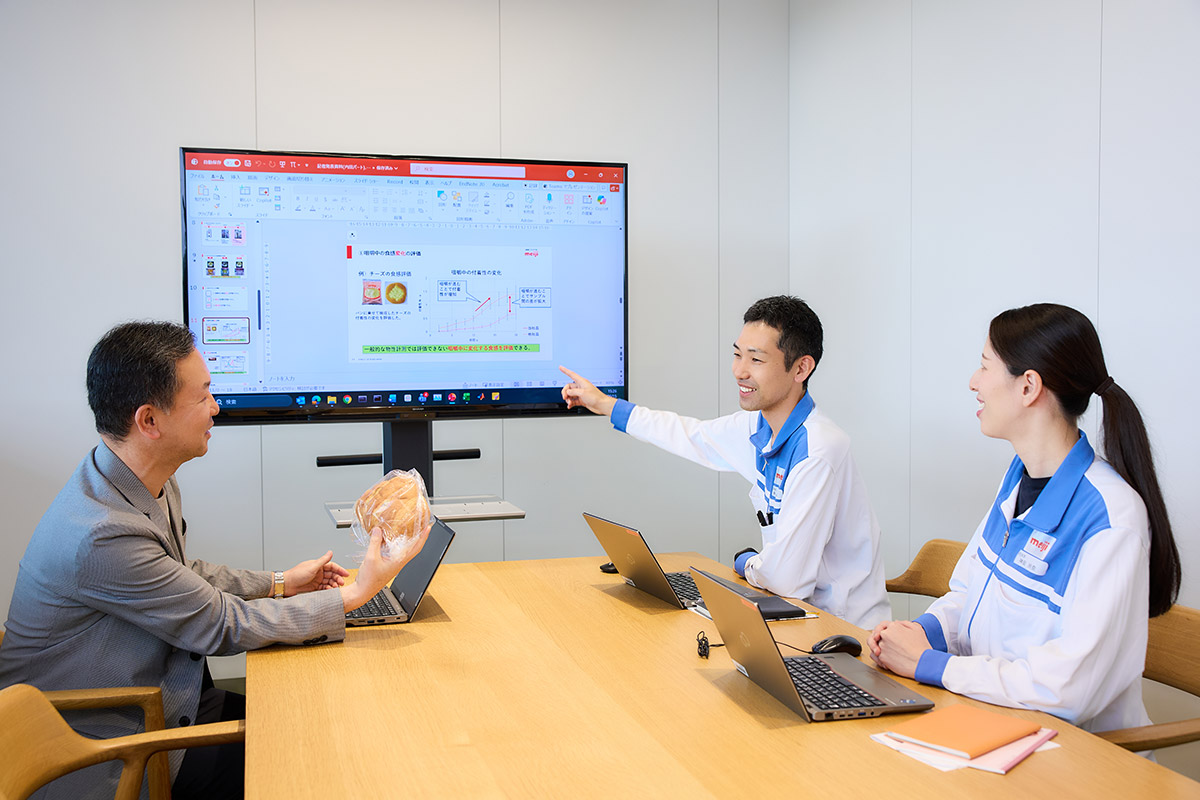
Meeting with an APC team member to discuss and analyze the texture of a wide variety of foods.
Enriching the food business with ORAL-MAPS
Naoki UchidaGeneral Manager, Food Solution Application Department, Food Solution Division, Meiji Co., Ltd.
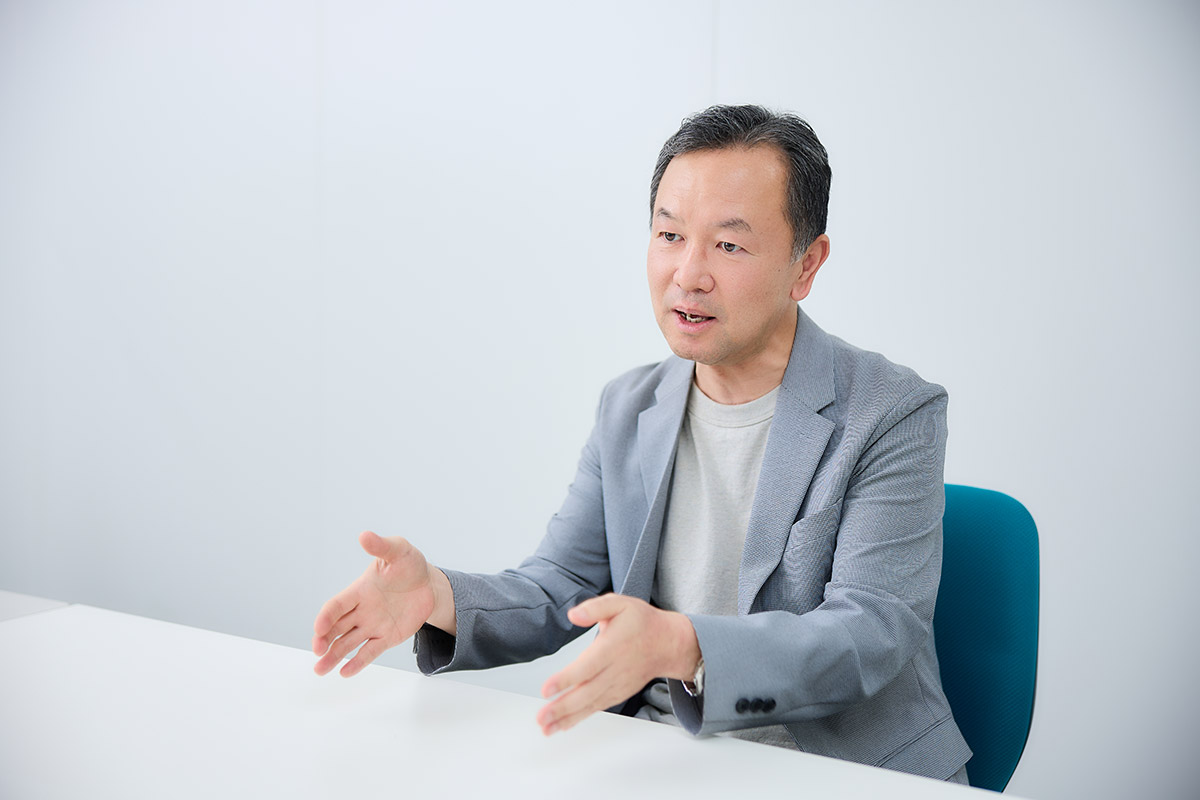
At APC, we provide ORAL-MAPS measurement services to help corporate customers solve complex product-development challenges, such as achieving the ideal texture for their foods. We analyze a wide range of foods, including how whipped cream melts in the mouth, how the texture of crab meat differs from that of imitation crab, and how the consistency of cooked rice changes when served at room temperature versus refrigerated. Each project presents a new challenge and a valuable learning opportunity for us.
We've received a lot of positive feedback from our business partners. Some have told us, "We can now clearly identify our products' strengths," while others appreciate having "a reliable benchmark for developing new products." We believe our research will help companies create foods with appealing textures—whether chewy, fluffy, or something entirely new—giving consumers even more ways to enjoy the foods they love.
A long-term vision for chewing and food texture
After years of working with ORAL-MAPS, Kanda is now setting her sights even higher.
"Our work at APC has greatly expanded the potential of ORAL-MAPS. I truly believe our research is contributing not only to Meiji's own products but also to product development across the food industry. Quantifying food texture gives us a common language. I hope ORAL-MAPS will be adopted not only within Meiji and throughout Japan, but also in countries and regions with different food cultures and preferences. I want to devote my career to researching the textures that help make all kinds of food delicious."
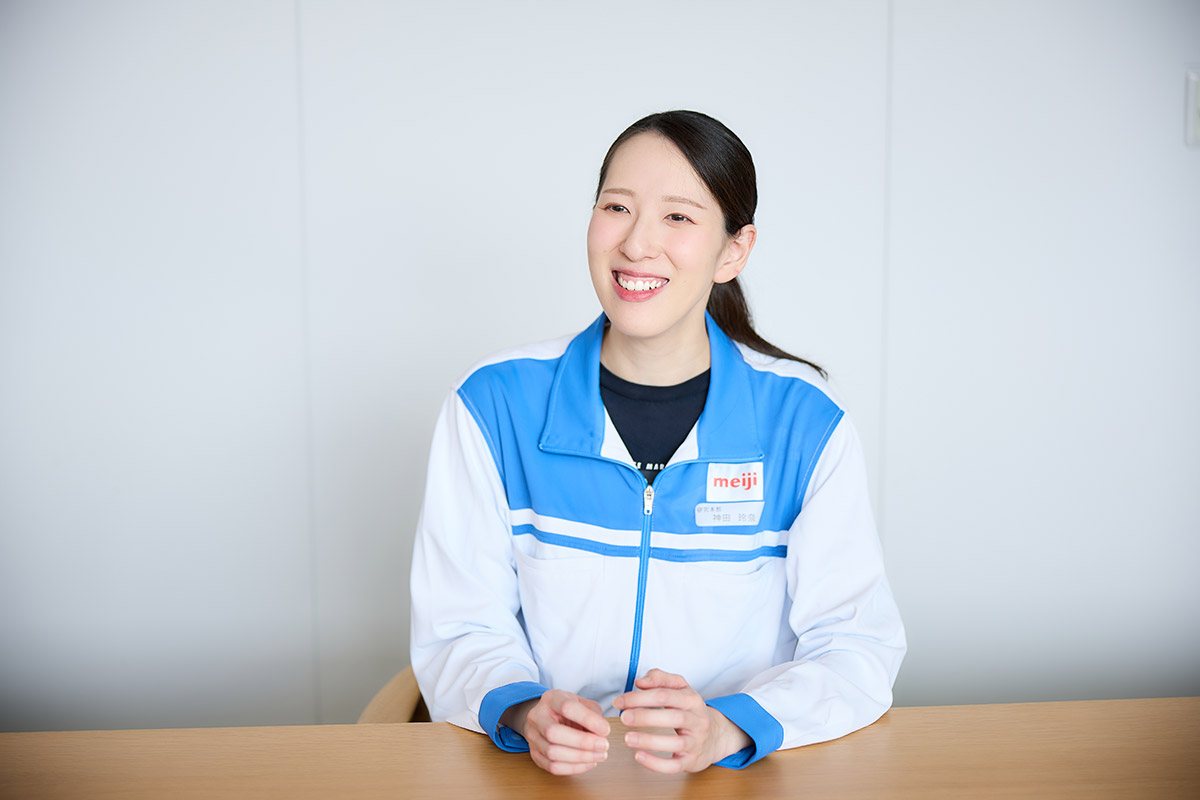
Inoue also hopes to expand the real-world applications of ORAL-MAPS.
"In research, many technologies never find practical applications and are eventually abandoned. That makes it especially rewarding to see ORAL-MAPS beginning to deliver tangible benefits. I hope to make the technology more widely available while continuing to refine it so that it can benefit people for many years to come."
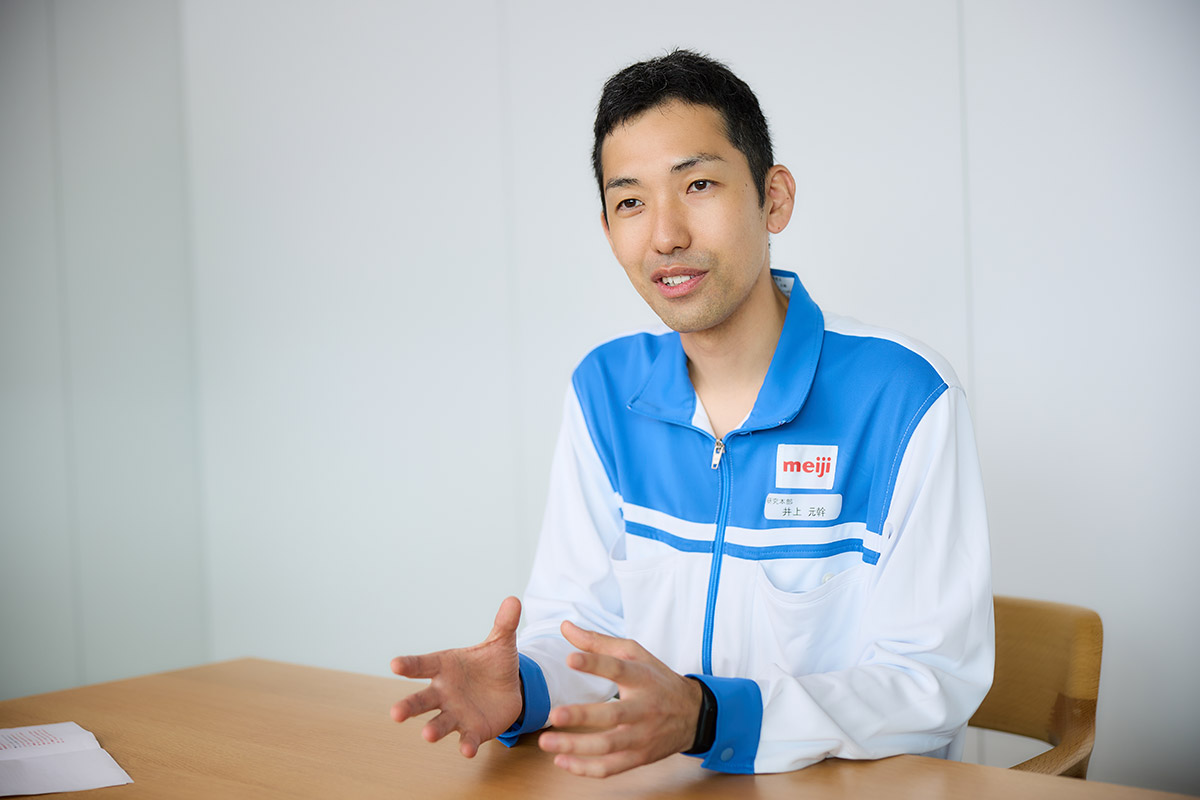
Today, Inoue has returned to his original research focus—chewing among older adults—and is developing simulations of declining oral function.
"I still remember the smiles of the residents I met during my practical training at a senior care facility. For people whose ability to chew and swallow has declined, what role do chewing and food texture play in the enjoyment of eating? I want to uncover what kinds of foods they can continue to enjoy."
Developed through the dedication of Inoue and Kanda, ORAL-MAPS is more than a device for measuring food texture. It has the potential to help more people experience the joy of eating, regardless of age or oral ability. By continuing to advance chewing research, Meiji aims to contribute to a healthier, more fulfilling future.